- Put za forticu 12c, Pobri 51410 Opatija, Croatia (HR)
- (+385) 51 603 025
- info@sopex.hr


The Future of Sterility Testing for Short Shelf Life Products
A Q&A with Industry Expert Miriam Guest on USP <73> and <1071> Updates
Sterility testing is a critical step in pharmaceutical manufacturing. It ensures that products meet the highest quality standards before reaching patients. As regulatory authorities encourage the adoption of Rapid Microbial Methods (RMMs), updates to USP <73> and <1071> are shaping the future of microbial detection. In this Q&A, we speak with Miriam Guest, Senior Principal Scientific Advisor at Charles River, about these changes and what they mean for sterility testing. Prior to joining Charles River, Miriam Guest spent 20+ years implementing global technologies and initiatives at AstraZeneca.
What are USP <73> and <1071>, and why are they important?
Miriam: USP <73> and <1071> are key chapters in the United States Pharmacopeia (USP) related to sterility testing. USP <73> (ATP Bioluminescence-Based Microbiological Methods for the Detection of Contamination in Short-Life Products) provides guidelines for alternative sterility methods that offer faster and reliable results compared to traditional growth-based methods. USP <1071> (Rapid Microbial Tests for Release of Sterile Short-Life Products: A Risk-based Approach) outlines the principles of risk assessment, sampling plans, and validation strategies for adopting RMMs across pharmaceutical applications.
These updates are important because they signal a growing regulatory acceptance of modern technologies, enabling manufacturers to transition from 14-day sterility testing to faster, more efficient methods for short-life products.

Regulatory Changes: USP 73 & 1071 Updates at a Glance
The latest chapters of USP <73> and <1071> introduce key updates impacting sterility testing and rapid microbiological methods (RMMs). Understanding these changes is crucial for compliance and optimizing your microbial testing strategy. Our expert guide breaks down what’s new and how Celsis® can help you stay compliant and efficient.
Explore the Guide
Why is traditional sterility testing a challenge for pharmaceutical manufacturers?
Miriam: Advances in pharmaceutical development has seen many new modalities in recent years. As our products evolve, our sterility assurance strategy must also evolve. The USP <71> sterility test requires a 14-day incubation period; this is beyond the shelf-life of many products. To that end, the adoption of robust rapid methods is essential.
How do the updates to USP <73> support the adoption of rapid sterility testing?
Miriam: USP <73> provides a framework for demonstrating method suitability of ATP-bioluminescence, ensuring they meet the same stringent reliability and accuracy standards as traditional tests. With technologies like ATP-bioluminescence, microbial contamination can be detected in just 4-6 days, significantly reducing the time required for sterility testing.
Regulatory bodies, including the FDA and EMA, are encouraging pharmaceutical companies to modernize their microbiological testing strategies, aligning with initiatives like Pharmaceutical Quality Systems (ICH Q10) and continuous process improvements. Ensuring a holistic contamination control strategy is key to sterility assurance, and rapid microbiological test methods are a key component of the contamination control strategy for products with short shelf-life.
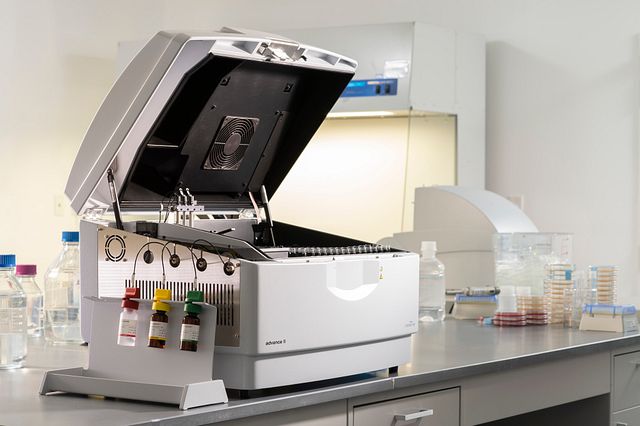
Webinar: Accelerate Sterility Testing with USP <73>
In this webinar, Labor LS and Charles River industry experts discuss how ATP-bioluminescence is shaping the future of short-life products. Explore real-world insights and validation strategies.
Watch the Replay
What is the role of USP <1071> in implementing Rapid Microbial Methods?
Miriam: USP <1071> serves as a guidance document for pharmaceutical manufacturers looking to implement Rapid Microbial Methods, or RMT as referred to in the chapter title. It provides direction on key aspects such as sample size considerations, technology selection-including ATP-bioluminescence, flow cytometry, and PCR-validation requirements like specificity, detection limits, and robustness, as well as regulatory submission strategies to gain approval for alternative methods. This chapter helps companies navigate the method validation and regulatory approval process, addressing concerns about compliance with existing sterility testing standards.
How does ATP-bioluminescence technology align with USP <73> and <1071>?
Miriam: ATP-bioluminescence is a well-established growth-based detection method that can identify viable microorganisms within a few days, rather than waiting for visible microbial growth. ATP-bioluminescence can detect the presence of viable contamination at lower levels than visual inspection, this results in a shorter time to detect. This aligns with USP <73>’s push for sterility tests that offer faster and equally reliable results for short shelf life products.
When following USP <73>, ATP-bioluminescence provides a robust, compliant alternative to membrane filtration and direct inoculation, making it ideal for sterility testing in injectable drugs, biologics, and CGT products.
What are the key benefits of switching to a rapid sterility testing method like Celsis® ATP-bioluminescence?
Miriam: When it comes to transitioning to ATP bioluminescence-based methods like Celsis® for rapid sterility testing, there are several advantages. One of the most significant is the reduction in sterility testing time from 14 days to just 4-6 days, which accelerates product availability. It also enhances data integrity by generating automated digital reports that minimize human error and comply with 21 CFR Part 11. From a regulatory perspective, it aligns with USP <73> and <1071>, supporting a science-driven approach to RMM validation. Additionally, earlier microbial detection strengthens contamination control by enabling faster investigations and corrective actions, ultimately enhancing patient safety.
What steps should pharmaceutical companies take to implement rapid sterility testing?
Miriam: Adopting a rapid method requires regulatory strategy, validation planning, and cross-functional alignment. Companies should engage with regulators early to discuss validation plans, follow USP <73> and <1071> guidance to ensure method robustness, and digitally integrate RMM results into quality systems for streamlined data tracking.
Many manufacturers partner with regulatory experts and technology providers like Celsis® to facilitate a smooth transition to RMM while ensuring compliance.
What’s next for sterility testing and RMM adoption?
Miriam: With the increasing regulatory push for modernized microbiology testing, we expect greater global acceptance of RMM by pharmacopoeias beyond USP, such as Ph. Eur. and JP, expanded use of ATP-bioluminescence in sterility and microbial limit testing, and more flexible regulatory pathways for validating and submitting RMM-based sterility methods.
The pharmaceutical industry is moving toward faster, more automated, and highly reliable microbiological quality control and rapid sterility testing is a key part of that transformation.
Final Thoughts?
Miriam: The updates to USP <73> and <1071> reflect a shift towards modern, science-driven sterility testing. By adopting rapid microbial detection technologies like ATP-bioluminescence, pharmaceutical manufacturers can achieve faster release times, better contamination control, and stronger regulatory compliance.


